
Medically reviewed by: Dr. Binayananda Padhee, MD, DM (Cardiology), Shri Medscan Imaging Center, Bhubaneswar.
Chest pain can be frightening, and it is natural to wonder what it means and what to do next. The reassuring news is that chest pain has many possible causes, and not all of them involve the heart. At the same time, some chest pain needs urgent medical attention, so it helps to understand what tests like an ECG and 2D Echo actually check, and when your doctor might recommend them.
This guide has been prepared by the cardiac diagnostics team at Shri Medscan Imaging Center, a diagnostic centre in Bhubaneswar, Odisha, offering ECG and 2D Echo testing with same-day reporting. This article explains the tests in plain language; it does not diagnose or rule out a heart condition.
Common Causes of Chest Pain (Not Always the Heart)
Chest pain can come from several different sources. Muscular strain from exercise, coughing or poor posture can cause soreness that feels like it is coming from deep in the chest. Digestive issues such as acid reflux or gas can also cause a burning or pressing sensation. Anxiety and panic can trigger chest tightness along with a racing heart. Chest pain can also arise from the lungs, ribs, or the lining around the heart.
Because so many conditions share similar symptoms, doctors often use tests like an ECG and 2D Echo to help understand what is happening, rather than relying on symptoms alone.
What Is an ECG (Electrocardiogram)?
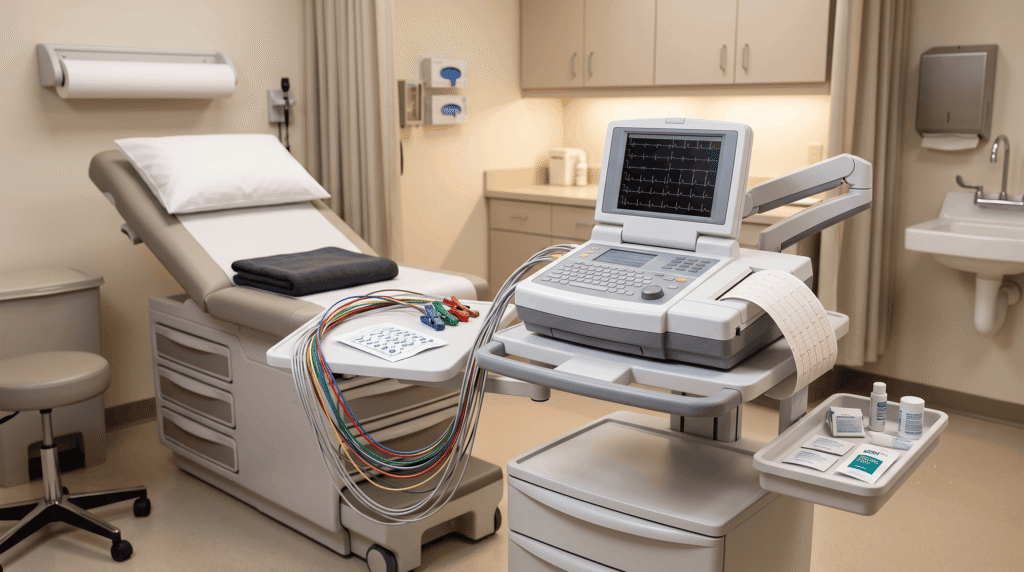
An ECG, or electrocardiogram, records the electrical activity of your heart using small electrodes placed on your chest, arms, and legs. It takes only a few minutes and is completely painless. An ECG shows your heart’s rhythm and can pick up patterns that suggest reduced blood flow, an irregular heartbeat, or strain on the heart muscle. It is often one of the first tests a doctor orders when someone reports chest pain.
What Is a 2D Echo (Echocardiogram)?
A 2D Echo, or echocardiogram, uses ultrasound waves, the same safe technology used in pregnancy scans, to create moving images of your heart. It shows the heart’s chambers, valves, and walls, and how well the heart is pumping blood. Unlike an ECG, which looks at electrical activity, a 2D Echo looks at the heart’s actual structure and function. It is painless and usually takes fifteen to thirty minutes.
ECG vs 2D Echo: What’s the Difference?
An ECG and a 2D Echo look at different aspects of the heart, and doctors frequently order both together for a fuller picture.
| Feature | ECG | 2D Echo |
|---|---|---|
| What it measures | Electrical activity and rhythm | Structure and pumping function |
| Technology | Electrodes on the skin | Ultrasound (sound waves) |
| Typical Duration | 5 to 10 minutes | 15 to 30 minutes |
| Good For | Rhythm problems, signs of reduced blood flow | Valve function, chamber size, pumping strength |
| Invasiveness | Non-invasive, no gel probe contact needed | Non-invasive, gel and probe placed on chest |
When Might a Doctor Recommend These Tests?
Doctors commonly order an ECG, a 2D Echo, or both, in situations such as:
- Chest pain, tightness or discomfort of any kind, to help understand what may be causing it
- Palpitations, or a sense of the heart racing, fluttering or skipping beats
- Unexplained breathlessness, especially with physical exertion
- Fainting spells or unexplained dizziness
- Routine cardiac screening for patients with risk factors such as high blood pressure, diabetes, high cholesterol, smoking, or a family history of heart disease
- Follow-up monitoring for a known heart condition
These tests support your doctor’s evaluation; they are one part of a broader assessment that includes your symptoms, history and examination.
What Happens During an ECG and Echo Test?
For an ECG, you will lie down while small sticky electrodes are placed on your chest, arms and legs. You stay still for a few minutes while the machine records your heart’s electrical signals, and there is no discomfort.
For a 2D Echo, you lie on your side while a small amount of gel and a handheld probe are used on your chest to capture ultrasound images of your heart on a screen. Both tests are painless, and you can usually resume normal activities right away.
When to Seek Emergency Care Immediately
Emergency Red-Flag Symptoms:
Seek emergency medical care immediately, rather than waiting for a scheduled test, if you experience:
- Severe or crushing chest pain or pressure
- Breathlessness or difficulty breathing
- Pain spreading to the arm, jaw, neck or back
- Cold sweats, nausea or vomiting alongside chest pain
- Sudden dizziness, fainting or a rapid, irregular heartbeat
ECG and 2D Echo Tests at Shri Medscan, Bhubaneswar
Shri Medscan Imaging Center offers ECG and 2D Echo testing at two locations in Bhubaneswar, Odisha, with same-day appointments and reporting:
Damana Square Centre
Damana Square, Chandrasekharpur, Bhubaneswar 751021
Phone: +91 7440191919
View location details and directions →AIIMS Road Centre
AIIMS Road, Patrapada, Bhubaneswar 751019
Phone: +91 7440000180
View location details and directions →We also offer digital X-ray, PFT (lung function testing), and a full range of diagnostic services across Bhubaneswar and Odisha.
Frequently Asked Questions
Q1: Does chest pain always mean a heart problem?
No. Chest pain can come from many sources, including muscle strain, acid reflux, anxiety, or a rib or lung issue, not only the heart. That said, severe or crushing chest pain should always be treated as an emergency until a doctor rules out a cardiac cause.
Q2: What is the difference between an ECG and a 2D Echo?
An ECG records the heart’s electrical activity in a few minutes using electrodes on the skin. A 2D Echo uses ultrasound to show the heart’s structure and pumping function. Doctors often order both together.
Q3: Are ECG and 2D Echo tests painful?
No. Both tests are non-invasive, quick, and painless. An ECG takes about five to ten minutes, and a 2D Echo typically takes fifteen to thirty minutes.
Q4: When should I go to the emergency room instead of booking a test?
Seek emergency care immediately for severe or crushing chest pain, breathlessness, pain radiating to the arm, jaw or back, cold sweats, or dizziness. Do not wait for a scheduled appointment.
Q5: Can an ECG or 2D Echo diagnose a heart attack on its own?
These tests provide important information that supports a doctor’s evaluation, but the final diagnosis is always made by a physician considering your symptoms, history, and other findings together.
Q6: Do I need a doctor’s referral for an ECG or 2D Echo at Shri Medscan?
A referral helps the test be interpreted in the context of your symptoms, but you can also call Shri Medscan directly to ask about booking a cardiac screening test.
Q7: Are ECG and 2D Echo tests available in Bhubaneswar?
Yes. Shri Medscan Imaging Center offers ECG and 2D Echo testing at Damana Square, Chandrasekharpur (7440191919) and AIIMS Road, Patrapada (7440000180), with same-day reporting.
Book an ECG or 2D Echo Test at SHRI MedScan, Bhubaneswar
Experienced cardiac diagnostics team. Quick reports. Two convenient locations. Open 7 days a week.
Call Now: +91 7440191919 (Damana) | +91 7440000180 (AIIMS Road)
Book Your Appointment →
Disclaimer: This article is for informational purposes only. It is not a substitute for professional medical advice, diagnosis, or treatment. It cannot identify a heart attack or diagnose any cardiac condition. If you are experiencing severe or emergency symptoms, seek immediate medical care.
Medically reviewed by: Dr. Binayananda Padhee, MD, DM (Cardiology), Shri Medscan Imaging Center, Bhubaneswar.