
Medically reviewed by: Dr. Abhipsa Beuria, MD (Radiodiagnosis), Shri Medscan Imaging Center, Bhubaneswar.
Bones naturally lose some density as we age, but for many people, this happens faster than expected and without any obvious symptoms. A bone density test, often called a BMD or DEXA scan, is a simple way to check bone strength before a fracture happens, rather than after. This guide explains what the test involves, who is generally advised to consider it, and how to prepare.
This guide has been prepared by the imaging team at Shri Medscan Imaging Center, a diagnostic centre in Bhubaneswar, Odisha, offering bone density (BMD) testing with same-day reporting.
What Is a Bone Density (BMD) Test?
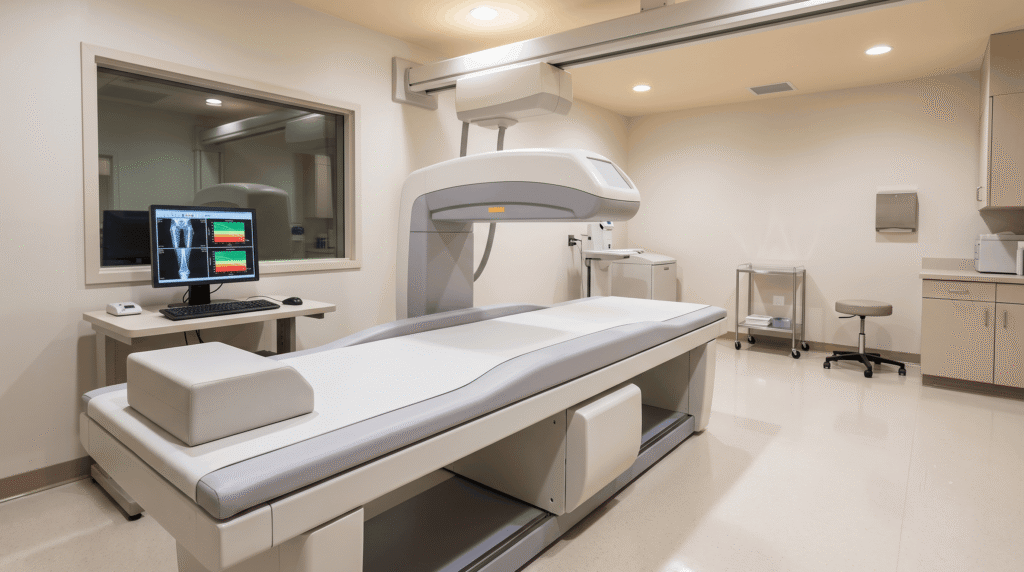
A BMD test, also known as a DEXA scan (dual-energy X-ray absorptiometry), measures how much calcium and mineral is packed into a section of your bone, usually the hip and spine. It uses a very low dose of X-ray, far lower than a standard X-ray, and the scan itself is painless.
The result gives your doctor an objective way to assess bone strength and estimate the risk of fracture, rather than guessing based on age or symptoms alone.
Why Is Bone Density Testing Important?
Bone loss usually happens silently, with no pain or warning signs, until a fracture occurs from a fall or even a minor bump. Because of this, bone density testing is valuable as an early-detection tool.
Identifying reduced bone density early gives your doctor the chance to recommend lifestyle changes, calcium and vitamin D support, or medication where appropriate, well before a fracture happens.
Who Should Consider a BMD Test?
Your doctor is best placed to advise whether a BMD test is right for you, but the following groups are commonly considered for screening:
Age & Menopause
- Women after menopause, since the drop in oestrogen can accelerate bone loss
- Adults generally over the age of 50, especially with other risk factors present
Family History & Lifestyle
- A family history of osteoporosis or hip fracture
- Low body weight or a small body frame
- Smoking or regular heavy alcohol use
- A sedentary lifestyle with limited weight-bearing activity
Conditions & Medications
- Long-term use of steroid medications
- Conditions such as rheumatoid arthritis, thyroid disorders, or digestive diseases affecting absorption
- A previous fracture from a minor fall or injury
How Is the BMD Test Performed?
You lie on a padded table, fully clothed as long as there is no metal near the area being scanned, while a scanning arm passes slowly over your hip and lower spine. There is no need to hold your breath, and the process is completely painless.
Most scans take around ten to twenty minutes. Because the radiation dose is so low, no special safety precautions are usually needed afterward, and you can resume normal activities immediately.
Understanding Your BMD Results (T-Score and Z-Score)
BMD reports typically include two scores:
- T-score: Compares your bone density to that of a healthy young adult and is the figure most commonly used to describe bone health in general terms.
- Z-score: Compares your bone density to others of your own age and sex and can be useful for identifying unusual bone loss in younger patients.
These are general definitions only. How a specific score applies to you depends on your age, sex, medical history, and other risk factors, so your doctor should always be the one to explain what your particular report means and what, if anything, to do next.
How to Prepare for a Bone Density Scan
- No fasting is generally required before a BMD scan.
- Avoid taking calcium supplements on the day of the test, since they can interfere with the reading.
- Wear comfortable clothing without metal zips, buttons or buckles near the hip and spine area, or be ready to change into a gown.
- Let the technologist know if you have had a recent barium study, CT scan with contrast, or nuclear medicine scan, since these can sometimes affect results if done too close together.
- Bring your doctor’s referral and any previous BMD reports for comparison, if you have had the test before.
Bone Density (BMD) Testing at Shri Medscan, Bhubaneswar
Shri Medscan Imaging Center offers bone density (DEXA) testing at two locations in Bhubaneswar, Odisha:
Damana Square Centre
Damana Square, Chandrasekharpur, Bhubaneswar 751021
Phone: +91 7440191919
View location details and directions →AIIMS Road Centre
AIIMS Road, Patrapada, Bhubaneswar 751019
Phone: +91 7440000180
View location details and directions →We also offer pathology lab services, including calcium and vitamin D testing that often complement a bone health check, along with a full range of diagnostic services across Bhubaneswar and Odisha.
Frequently Asked Questions
Q1: Who should get a bone density (BMD) test?
Common candidates include women after menopause, adults over 50 with risk factors, people with a family history of osteoporosis, long-term steroid users, those with a low body weight, and smokers. Your doctor can advise whether testing is right for you.
Q2: Is a bone density scan painful?
No. A BMD or DEXA scan is painless, quick, and uses a very low dose of X-ray. You simply lie still on a table while the scanner passes over you.
Q3: Do I need to fast before a BMD test?
No fasting is generally required. It is usually recommended that you avoid calcium supplements on the day of the test, since they can interfere with the reading.
Q4: What do T-score and Z-score mean?
A T-score compares your bone density to that of a healthy young adult, while a Z-score compares it to others of your own age and sex. Interpretation depends on your individual clinical context, so your doctor should always explain what your specific report means.
Q5: How long does a bone density test take?
A BMD scan is quick, usually taking around ten to twenty minutes depending on how many areas are examined.
Q6: Can I self-diagnose osteoporosis from my BMD report?
No. A BMD report should always be reviewed and explained by your doctor, who will consider your full medical history and risk factors before advising on next steps.
Q7: Where can I get a bone density test in Bhubaneswar?
Shri Medscan Imaging Center offers BMD (DEXA) testing at Damana Square, Chandrasekharpur (7440191919) and AIIMS Road, Patrapada (7440000180), with same-day reporting.
Book Your Bone Density (BMD) Test at SHRI MedScan, Bhubaneswar
Quick, low-dose scanning. Experienced radiology team. Two convenient locations. Open 7 days a week.
Call Now: +91 7440191919 (Damana) | +91 7440000180 (AIIMS Road)
Book an Appointment →
Disclaimer: This article is for informational purposes only. It is not a substitute for professional medical advice. Bone density results and their interpretation depend on individual clinical context. Always consult your doctor for personalised risk assessment and guidance.
Medically reviewed by: Dr. Abhipsa Beuria, MD (Radiodiagnosis), Shri Medscan Imaging Center, Bhubaneswar.