
Medically reviewed by: Dr. Y. N. Kumar, MD, Shri Medscan Imaging Center, Bhubaneswar.
If your doctor has recommended an EEG test, it is natural to have questions. What does the test involve? Does it hurt? How should you prepare? This guide answers all of these questions in simple, easy-to-understand language.
This article has been prepared by the neurology diagnostics team at Shri Medscan Imaging Center, a diagnostic centre in Bhubaneswar, Odisha, offering EEG testing at two convenient locations.
What Is an EEG (Electroencephalogram)?
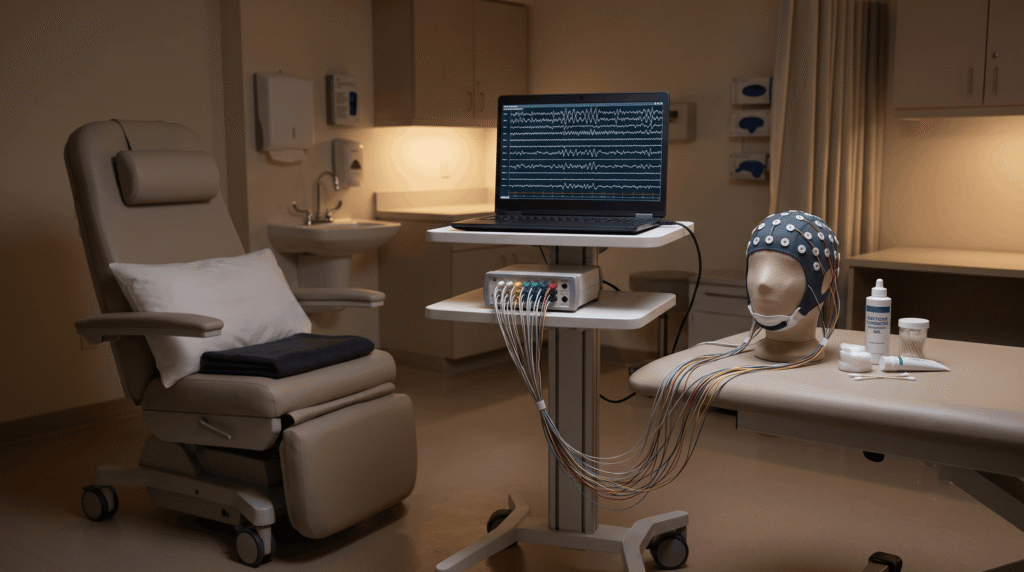
An EEG is a painless, non-invasive test that records the electrical activity of your brain. Small, flat metal discs called electrodes are placed on your scalp using a water-soluble paste. These electrodes detect the tiny electrical signals your brain cells produce and display them as wave patterns on a screen.
The test does not send any electricity into your body. It simply listens to the electrical activity your brain naturally generates. There is no radiation, no needles, and no pain involved.
EEG is one of the most commonly used tests in neurology. Only a neurologist can interpret the final report and advise you on what it means for your health.
Why Might a Doctor Recommend an EEG?
Doctors order EEG tests to evaluate a range of brain-related symptoms and conditions. Common general reasons include:
- Seizures or suspected epilepsy
- Unexplained fainting or blackouts
- Sleep disorders or unusual behaviour during sleep
- Persistent or severe headaches that do not respond to standard treatment
- Brain infections or inflammation
- Monitoring brain activity after a head injury
- Evaluating changes in consciousness or behaviour
An EEG helps the neurologist see whether brain wave patterns are typical or show abnormalities. However, an abnormal EEG does not automatically mean you have a specific condition. Your neurologist will interpret the results alongside your symptoms, medical history, and any other tests.
How to Prepare for an EEG Test
Proper preparation helps ensure the electrodes make good contact with your scalp and the recording is as clear as possible.
Hair Washing and Scalp Care
Wash your hair the night before or on the morning of the test. Use shampoo only. Do not apply any of the following after washing:
- Hair oil or coconut oil
- Hair gel, mousse, or wax
- Hair spray or leave-in conditioner
- Dry shampoo
These products create a barrier between the electrodes and your scalp, which can weaken the signals and reduce the accuracy of the recording. Clean, dry, product-free hair gives the best results.
Sleep and Medication Instructions
Your doctor’s instructions regarding sleep are important and specific to your test:
- Standard EEG: Get a normal, full night of sleep before the test. Arrive well-rested.
- Sleep-deprived EEG: Your doctor may ask you to reduce your sleep the night before (for example, sleeping only 4 to 5 hours or staying awake all night). This type of EEG is used to detect brain activity patterns that only appear when the brain is tired. Follow your doctor’s exact instructions.
Medication & Dietary Guidelines:
- Continue taking all your regular medications unless your doctor specifically tells you to pause any of them before the test. Some anti-seizure medications may need to be adjusted, but only if your neurologist gives you those instructions. Never stop a medication on your own.
- Avoid caffeine (tea, coffee, energy drinks) for at least 8 to 12 hours before the test, as caffeine can affect brain wave patterns.
- Eat a normal meal before your appointment. Low blood sugar can influence EEG results.
What Happens During the EEG Procedure?
Step 1: Setup
A trained EEG technician will seat you comfortably and measure specific points on your scalp. Small electrodes are attached to these points using a water-soluble paste. The setup takes about 15 to 20 minutes.
Step 2: Recording
Once the electrodes are in place, the machine begins recording your brain’s electrical activity. You will be asked to relax, close your eyes, and stay still. The recording period typically lasts 20 to 40 minutes.
Step 3: Activation Tests
During the recording, the technician may ask you to breathe deeply and rapidly (hyperventilation), look at a flashing light (photic stimulation), or open and close your eyes at intervals. These activities are designed to reveal certain brain wave patterns that may not appear during rest.
Step 4: Removal
After the recording, the technician removes the electrodes and cleans the paste from your scalp. You can resume your normal activities immediately.
The entire appointment, including setup, recording, and cleanup, typically takes about 60 to 90 minutes.
Is an EEG Test Painful or Risky?
No. An EEG is completely painless and carries no known risks. The electrodes sit on the surface of your scalp and simply detect signals. No electricity is sent into your brain. There are no needles, no radiation, and no side effects.
The paste used to attach the electrodes washes out easily with regular shampoo and water. Some patients may find the paste slightly sticky, but it causes no discomfort or skin irritation.
After the Test: What Happens Next?
You can leave the centre immediately after the test and return to your normal routine. There are no restrictions on eating, driving, or working.
A neurologist or qualified reporting physician reviews the EEG recording and prepares a detailed report. Reports are typically available within 24 to 48 hours. Share your EEG report with your referring doctor, as the results need to be interpreted alongside your symptoms and clinical history.
EEG for Children: Helpful Tips
Children are often referred for EEG tests, particularly for seizure evaluation. Parents and caregivers can help by:
- Explaining the test in simple terms: Tell your child that a technician will put small stickers on their head to listen to their brain. Emphasise that it will not hurt.
- Bringing comfort items: A favourite toy, blanket, or book can help keep a young child calm during the recording period.
- Following sleep instructions: If a sleep-deprived EEG is requested for your child, follow your doctor’s guidance carefully. For very young children, the doctor may ask you to keep them awake longer than usual so they are likely to fall asleep naturally during the test.
- Washing their hair: Use shampoo only. No oil, gel, or conditioner. The same scalp preparation rules apply to children.
- Staying calm yourself: Children pick up on a parent’s anxiety. Stay relaxed and reassuring, and the child is more likely to cooperate.
The EEG team at Shri Medscan is experienced in working with children and will do their best to keep the process comfortable and stress-free.
Where to Get an EEG Test in Bhubaneswar
Shri Medscan Imaging Center offers EEG testing at two locations in Bhubaneswar:
Damana Square, Chandrasekharpur
Damana Square, Chandrasekharpur, Bhubaneswar 751021
Phone: +91 7440191919
View location details →AIIMS Road, Patrapada
AIIMS Road, Patrapada, Bhubaneswar 751019
Phone: +91 7440000180
View location details →We also offer NCV and EMG tests and a full range of diagnostic services across Bhubaneswar and Odisha.
Frequently Asked Questions About the EEG Test
Q1: What is an EEG test used for?
An EEG records the electrical activity of the brain. Doctors use it to evaluate seizures, epilepsy, unexplained fainting, sleep disorders, headaches, and other brain-related symptoms. Only a neurologist can interpret the results and advise on what they mean.
Q2: Is the EEG test painful?
No. The EEG is completely painless. Small electrodes are placed on the surface of your scalp. No electricity enters your body. There are no needles or radiation.
Q3: How should I prepare my hair for an EEG?
Wash your hair with shampoo only. Do not apply oil, gel, spray, conditioner, or any styling products after washing. Clean, dry, product-free hair allows the electrodes to make proper contact with your scalp.
Q4: How long does an EEG take?
The full appointment takes about 60 to 90 minutes. This includes 15 to 20 minutes for electrode setup, 20 to 40 minutes of recording, and a few minutes for removal and cleanup.
Q5: Can children have an EEG test?
Yes. EEG is safe for patients of all ages, including infants and children. It is one of the most common tests for evaluating seizures in children. The EEG team at Shri Medscan is experienced in working with young patients.
Q6: What is a sleep-deprived EEG?
A sleep-deprived EEG requires you to reduce your sleep the night before the test, as instructed by your doctor. This helps detect brain wave abnormalities that may only appear when the brain is tired. Follow your doctor’s specific sleep instructions carefully.
Q7: How much does an EEG cost at Shri Medscan?
EEG testing at Shri Medscan is competitively priced. Call 7440191919 (Damana) or 7440000180 (AIIMS Road) for current pricing.
Schedule Your EEG Test at Shri Medscan, Bhubaneswar
Experienced neurophysiology technicians. Accurate readings. Two convenient locations. Open 7 days a week.
Call: +91 7440191919 (Damana) | +91 7440000180 (AIIMS Road)
Visit Our Contact Page to Book →
Disclaimer: This article is for informational purposes only. Always confirm specific preparation instructions with your prescribing doctor or diagnostic centre.
Medically reviewed by: Dr. Y. N. Kumar, MD, Shri Medscan Imaging Center, Bhubaneswar.