
Medically reviewed by: Dr. Y. N. Kumar, MD, Shri Medscan Imaging Center, Bhubaneswar.
If your doctor has recommended a PFT, or pulmonary function test, you might be wondering what it involves and why it matters. A PFT is a simple, painless way to check how well your lungs are working, often using a technique called spirometry. This guide explains what the test measures, why doctors order it, and how to prepare so your appointment goes smoothly.
This guide has been prepared by the diagnostics team at Shri Medscan Imaging Center, a diagnostic centre in Bhubaneswar, Odisha, offering PFT (lung function testing) with same-day reporting.
What Is a Pulmonary Function Test (PFT)?
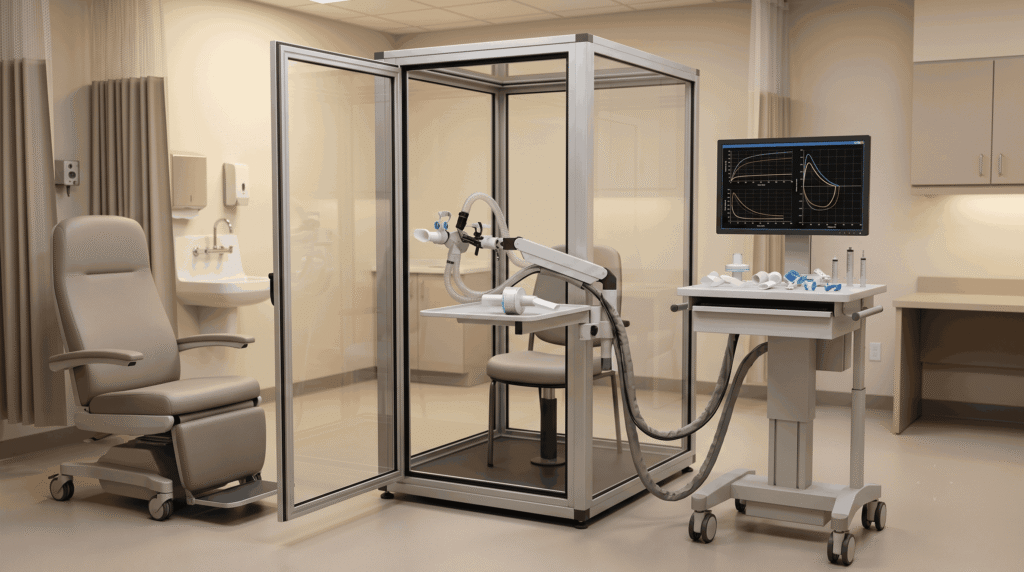
A PFT is a group of breathing tests that measure how much air your lungs can hold, how quickly you can move air in and out, and how efficiently oxygen passes into your bloodstream. The most common version, spirometry, involves breathing into a mouthpiece connected to a machine that records your breathing pattern. It is non-invasive, quick, and does not involve needles or radiation of any kind.
Why Do Doctors Order a PFT?
A PFT can be useful in a range of situations. Common general reasons doctors recommend it include:
- Breathlessness that is unexplained or has been going on for a while
- A chronic cough or persistent wheezing
- Pre-surgery evaluation, to check lung function before an operation
- Monitoring a known respiratory condition over time
- Screening for smokers or people with long-term occupational exposure to dust or fumes
A PFT is one part of a broader clinical picture; your doctor combines it with your symptoms, history and examination to decide what it means for you.
How to Prepare for Your PFT
Preparation Guidelines:
- Avoid a heavy meal in the few hours before your test, since a full stomach can make deep breathing uncomfortable.
- Avoid smoking for at least a few hours before the test, if possible.
- Avoid strenuous exercise shortly before your appointment.
- Wear loose, comfortable clothing that does not restrict your chest or abdomen.
- Tell the technician about any inhalers or respiratory medications you use; only pause these if your doctor has specifically told you to.
- Bring your doctor’s referral and any previous PFT reports for comparison, if you have had the test before.
What Happens During the Test?
You will be asked to sit comfortably, and a soft clip may be placed on your nose so that all your breathing goes through your mouth. You then breathe into a mouthpiece as instructed by the technician, usually taking a deep breath in and blowing out as hard and fast as you can, sometimes followed by normal, quiet breathing. This is repeated a few times to get consistent, reliable readings. The whole process usually takes around fifteen to thirty minutes.
Is the PFT Test Uncomfortable or Risky?
A PFT is generally very well tolerated. It is not painful, though the deep breathing manoeuvres can feel a little tiring, and some patients feel briefly lightheaded, which passes quickly once breathing returns to normal. Serious risks are rare. Let the technician know at any point if you feel unwell or need a short break.
Understanding Your PFT Report in Simple Terms
A PFT report usually includes a few key measurements, such as how much air you can forcefully exhale and how quickly you can exhale it, often compared to expected values for someone of your age, height and sex. These numbers on their own do not tell the full story. Your doctor reviews the report alongside your symptoms and history to understand what it means for your specific situation, so the final interpretation should always come from your treating physician rather than the numbers alone.
PFT Testing at Shri Medscan, Bhubaneswar
Shri Medscan Imaging Center offers PFT (spirometry) testing at two locations in Bhubaneswar, Odisha:
Damana Square, Chandrasekharpur
Damana Square, Chandrasekharpur, Bhubaneswar 751021
Phone: +91 7440191919
View location details →AIIMS Road, Patrapada
AIIMS Road, Patrapada, Bhubaneswar 751019
Phone: +91 7440000180
View location details →If breathlessness is accompanied by chest discomfort, our ECG and 2D Echo services may also be relevant, and your doctor can advise which tests are appropriate. We also offer a full range of diagnostic services across Bhubaneswar and Odisha.
Frequently Asked Questions
Q1: What does a PFT (pulmonary function test) actually measure?
A PFT, usually done through spirometry, measures how much air your lungs can hold and how quickly you can breathe air in and out. It helps show how well your lungs are working.
Q2: Is a PFT test painful?
No. A PFT is not painful. You simply breathe into a mouthpiece as instructed. Some patients feel briefly lightheaded during the deep breathing manoeuvres, which passes quickly.
Q3: How should I prepare for a PFT test?
Avoid a heavy meal and smoking for a few hours before the test, and avoid strenuous exercise beforehand. Tell the technician about any inhalers or medications you use, since some may need to be paused only if your doctor specifically advises it.
Q4: Can a PFT diagnose asthma or COPD on its own?
No. A PFT report should always be reviewed alongside your doctor’s clinical assessment. It provides useful information but does not diagnose a specific condition by itself.
Q5: How long does a PFT test take?
A standard PFT usually takes around fifteen to thirty minutes, including a few practice attempts to get consistent, reliable readings.
Q6: Should I stop my inhaler before the test?
Only if your doctor has specifically told you to. In many cases you should continue your regular medication and simply inform the technician what you have taken and when.
Q7: Where can I get a PFT test in Bhubaneswar?
Shri Medscan Imaging Center offers PFT (spirometry) testing at Damana Square, Chandrasekharpur (7440191919) and AIIMS Road, Patrapada (7440000180), with same-day reporting.
Book Your PFT (Lung Function) Test at SHRI MedScan, Bhubaneswar
Quick, painless spirometry testing. Experienced technicians. Two convenient locations. Open 7 days a week.
Call Now: +91 7440191919 (Damana) | +91 7440000180 (AIIMS Road)
Visit Our Contact Page to Book →
Disclaimer: This article is for informational purposes only. It is not a substitute for professional medical advice, diagnosis, or treatment. It cannot diagnose asthma, COPD, or any respiratory condition. If you are experiencing severe or worsening breathlessness, seek immediate medical care.
Medically reviewed by: Dr. Y. N. Kumar, MD, Shri Medscan Imaging Center, Bhubaneswar.