
Medically reviewed by: Dr. Rajat Kumar Sahu, MD (Radiodiagnosis, PGIMER Chandigarh), Shri Medscan Imaging Center, Bhubaneswar.
If your doctor has prescribed a digital X-ray or a CT scan, you might be wondering what the difference is and why one was chosen over the other. Both are common imaging tests, but they work differently and are suited to different clinical situations. This guide explains the two tests in plain language so you can better understand your doctor’s prescription.
This guide has been prepared by the imaging team at Shri Medscan Imaging Center, a diagnostic centre in Bhubaneswar, Odisha, offering digital X-ray and CT scan services with same-day reporting. If you are weighing an MRI against a CT scan instead, our companion guide, MRI vs CT Scan: What’s the Difference?, may also help.
What Is a Digital X-Ray?
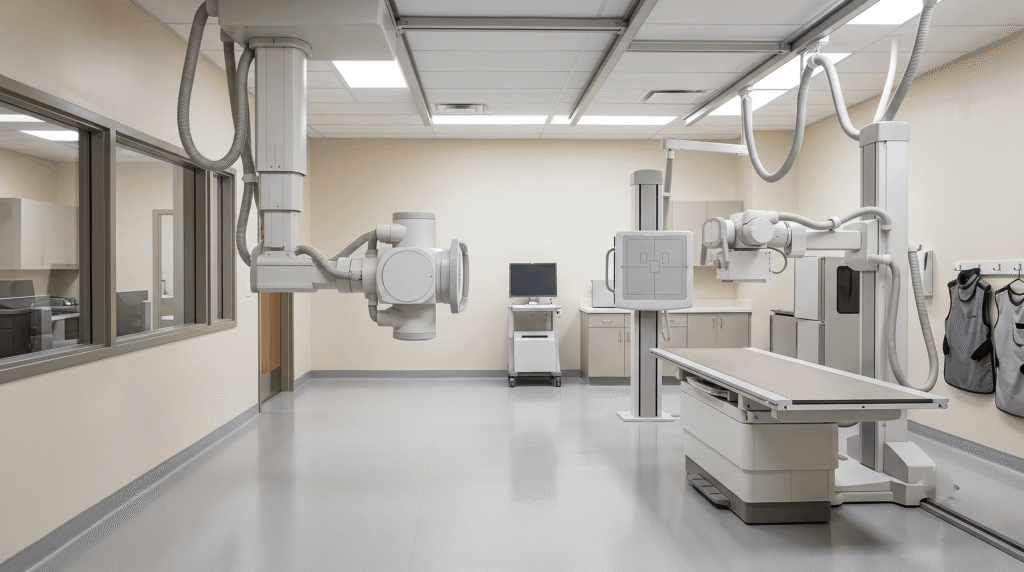
A digital X-ray is a quick imaging test that uses a small dose of radiation to create a picture of the inside of your body, most commonly bones, the chest, or joints. The image appears almost instantly on a screen, which is why it is called digital.
X-rays are especially useful for looking at bone structure and detecting straightforward fractures, and they remain one of the fastest, most accessible imaging tools available.
What Is a CT Scan?
A CT scan, or computed tomography scan, also uses X-rays, but it combines many images taken from different angles to build detailed, cross-sectional pictures of the body. This gives doctors a much more three-dimensional view of organs, blood vessels, bones and soft tissue together.
CT scans are especially useful for more complex evaluations, such as internal injuries, certain cancers, or urgent situations where speed and detail both matter.
Key Differences: Digital X-Ray vs CT Scan
Both tests use X-ray technology, but they differ in the level of detail, radiation involved, and typical time and cost.
| Feature | Digital X-Ray | CT Scan |
|---|---|---|
| Image Detail | Single, flat, two-dimensional image | Detailed, cross-sectional, 3D slices |
| Radiation Exposure | Very low dose (comparable to natural background) | Higher dose (minimised with modern protocols) |
| Scan Time | Quick (often under 5 minutes) | 10 to 20 minutes |
| Best For | Simple fractures, bone checks, basic chest check | Complex fractures, internal trauma, soft tissue, oncology |
| Relative Cost | More affordable | Higher due to advanced processing |
Detail and Image Quality
A digital X-ray produces a single, flat, two-dimensional image, which is often enough to assess bones or the chest. A CT scan produces detailed, cross-sectional, near three-dimensional images, useful for examining complex structures or overlapping organs that a plain X-ray cannot show clearly.
Radiation Exposure
A digital X-ray involves a very low radiation dose, often comparable to a few days of natural background radiation. A CT scan involves a higher dose, since it combines multiple X-ray images, though modern low-dose CT protocols have reduced this considerably. Your doctor weighs this exposure against the diagnostic benefit before recommending a CT scan.
Time and Cost
A digital X-ray is usually the quicker and more affordable option, often taking just a few minutes. A CT scan typically takes longer, around ten to twenty minutes depending on the area being examined, and generally costs more due to the more advanced equipment and detailed processing involved.
Clinical Application: When Is Each Scan Used?
When Is a Digital X-Ray Usually Enough?
A digital X-ray is often sufficient for straightforward situations, such as:
- Suspected simple bone fractures (e.g. wrist, ankle)
- Routine chest checks for infections or pneumonia
- Initial joint pain assessment
- Monitoring a healing bone over time
It is frequently the first test a doctor orders because it is fast, low-dose, and widely accessible.
When Does a Doctor Recommend a CT Scan Instead?
A doctor may recommend a CT scan when more cross-sectional detail is required:
- Complex or joint-involving fractures hard to see on plain film
- Suspected internal bleeding or trauma after accidents
- Certain abdominal, lung, or pelvic conditions
- Emergency situations where fast, detailed evaluation is vital
The final decision depends on your clinical examination as evaluated by your physician.
Are These Scans Safe?
Both digital X-rays and CT scans are considered safe when performed for a valid medical reason by qualified professionals. Both involve a small amount of radiation, and doctors always weigh the diagnostic benefit against this exposure, particularly in children or during pregnancy, when extra caution is used.
If you have any specific safety concerns, such as a possible pregnancy, let your doctor and the imaging team know beforehand.
Digital X-Ray and CT Scan Services at Shri Medscan, Bhubaneswar
Shri Medscan Imaging Center offers digital X-ray and CT scan services at two locations in Bhubaneswar, Odisha:
Damana Square, Chandrasekharpur
Damana Square, Chandrasekharpur, Bhubaneswar 751021
Phone: +91 7440191919
View location details and directions →AIIMS Road, Patrapada
AIIMS Road, Patrapada, Bhubaneswar 751019
Phone: +91 7440000180
View location details and directions →We also offer MRI scans and a full range of diagnostic services across Bhubaneswar and Odisha, all reviewed and reported by qualified radiologists.
Frequently Asked Questions
Q1: Is a CT scan always better than a digital X-ray?
Not necessarily. A CT scan gives more detailed, cross-sectional images, but it also involves a higher radiation dose and cost. For many simple injuries, a digital X-ray gives the treating doctor all the information needed.
Q2: Which has more radiation, an X-ray or a CT scan?
A CT scan generally involves a higher radiation dose than a single digital X-ray, since it combines many X-ray images taken from different angles to build a detailed picture.
Q3: Can an X-ray detect a fracture, or do I need a CT scan?
A digital X-ray is often the first test used for a suspected fracture and can detect most breaks clearly. A CT scan may be recommended for complex fractures or when a more detailed view is needed.
Q4: How much faster is an X-ray compared to a CT scan?
A digital X-ray usually takes only a few minutes, while a CT scan typically takes around ten to twenty minutes, depending on the area being examined.
Q5: Who decides whether I need an X-ray or a CT scan?
Your treating doctor decides based on your symptoms, examination findings, and clinical judgment. This article is meant to help you understand the terms, not to choose the test yourself.
Q6: Are digital X-rays and CT scans safe?
Both are generally safe when performed for a valid medical reason by qualified professionals. Both involve a small amount of radiation, weighed against the diagnostic benefit by your doctor.
Q7: Where can I get a digital X-ray or CT scan in Bhubaneswar?
Shri Medscan Imaging Center offers digital X-ray and CT scan services at Damana Square, Chandrasekharpur (7440191919) and AIIMS Road, Patrapada (7440000180), with same-day reporting.
Book a Digital X-Ray or CT Scan at SHRI MedScan, Bhubaneswar
Experienced radiology team. Fast turnaround. Two convenient locations. Open 7 days a week.
Call Now: +91 7440191919 (Damana) | +91 7440000180 (AIIMS Road)
Visit Our Contact Page to Book →
Disclaimer: This article is for informational purposes only. It is not a substitute for professional medical advice. The choice of imaging test is a clinical decision made by your treating doctor based on your specific situation.
Medically reviewed by: Dr. Rajat Kumar Sahu, MD (Radiodiagnosis, PGIMER Chandigarh), Shri Medscan Imaging Center, Bhubaneswar.